SAMS news room
Seaweed survival plan unveiled at COP 31
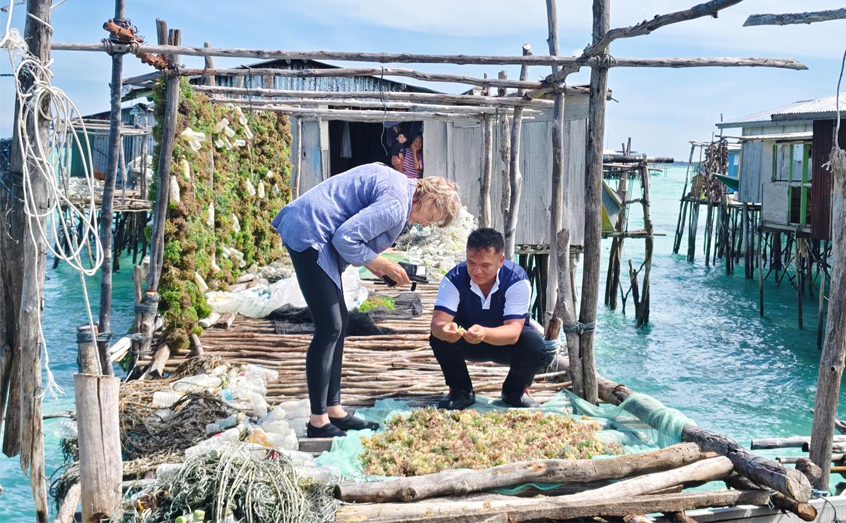
SAMS scientists have joined marine scientists, international organisations and government representatives at COP31 to launch a new initiative to protect the world's seaweed ecosystems.
The Seaweed Breakthrough, which launches today (Saturday), calls on countries and organisations to conserve, restore and sustainably manage seaweed habitats. The UK-led GlobalSeaweed programme – represented by SAMS, the Natural History Museum and the University of Malaya – will launch the policy brief at the conference’s Malaysia Pavilion.
Seaweed research is carried out by scientists all over the world, but until now there has been no shared plan to bring that knowledge together and put it to work for conservation.
Professor Elizabeth Cottier-Cook of SAMS, one of the scientific leads behind the Seaweed Breakthrough, said: “The importance of seaweeds to the planet and to livelihoods in developing nations has been overlooked and underestimated in discussions about the current climate change and biodiversity crises.
“Seaweeds provide essential ecosystem services, such as carbon cycling, coastal protection and biodiversity enhancement. Additionally, the seaweed farming industry supports around six million families in 56 countries and provides a sustainable source of food, cosmetics, animal feed and other products.
“However, in the face of climate change and biodiversity loss, many important species are at the risk of extinction, so we urge those with influence to begin putting protections in place.”
Seaweeds are vital to healthy oceans. They provide food and shelter for marine life, help protect coastlines and play an important role in the global carbon cycle. But despite their importance, seaweed habitats receive little protection and are under growing pressure.
Rising sea temperatures, marine heatwaves, pollution, overharvesting and invasive species are all affecting wild seaweed populations. Research by the GlobalSeaweed team suggests seaweeds could reduce by up to 70% by 2100.
The consequences would be felt by both nature and people. Global seaweed production has tripled over the past two decades, reaching 38 million tonnes in 2022 and an estimated value of $17 billion. The industry supports more than six million farmers, mainly in low and middle income countries, and accounts for more than half of global marine and coastal aquaculture production.
Seaweed farming also depends on healthy wild populations, which provide the seed stocks and genetic diversity needed to develop strains that can cope with changing conditions. Protecting wild seaweeds is therefore important for the future of the industry as well as the marine life that depends on them.
The Breakthrough's five goals include reducing the loss of seaweed habitats by 70% by 2030, increasing the area under long term protection, restoring damaged habitats, supporting the livelihoods of seaweed farmers and securing at least $17.5 billion in funding for conservation and restoration. The targets are intended to give governments and organisations a clear direction for action and bring seaweeds into wider plans to tackle climate change and biodiversity loss.
The team behind the Breakthrough hopes its work will inspire people to pay more attention to the humble yet incredibly valuable seaweeds.
Watch the livestream of the Seaweed Breakthrough launch here.
To support the work of the Seaweed Breakthrough, visit Seaweed Breakthrough – Part of the 2030 Ocean Breakthroughs to find out more and to register your support. The call is also part of the 2030 Ocean Breakthroughs, which contribute to cutting global emissions by up to 35% while helping achieve key international goals including the Paris Agreement, Sustainable Development Goals, and the Kunming-Montreal Global Biodiversity Framework.

Euan Paterson
Communications and Media Officer
Euan.Paterson@sams.ac.uk
01631 559342 (direct dial)
07827 963984 (mobile)
01631 559000 (switchboard)